 01
A measured jaw evaluation and device care
Opening, tracking and muscle tenderness are measured, and external device treatment is planned where the findings support it.
Science-Backed, Innovative Care in Leesburg, FL. Schedule Your Appointment.

Jaw pain when you chew, a click when you open, and a mouth that will not open as wide as it used to. Most jaw problems settle with simple measures. Care here is for the ones that have not.
TMD, or temporomandibular disorder, is pain or dysfunction in the jaw joint in front of the ear and the muscles that move it. It causes jaw pain, clicking and limited opening. Revive by MWS in Leesburg measures jaw movement and examines the joint and muscles, then considers external, non-invasive device treatment where indicated.
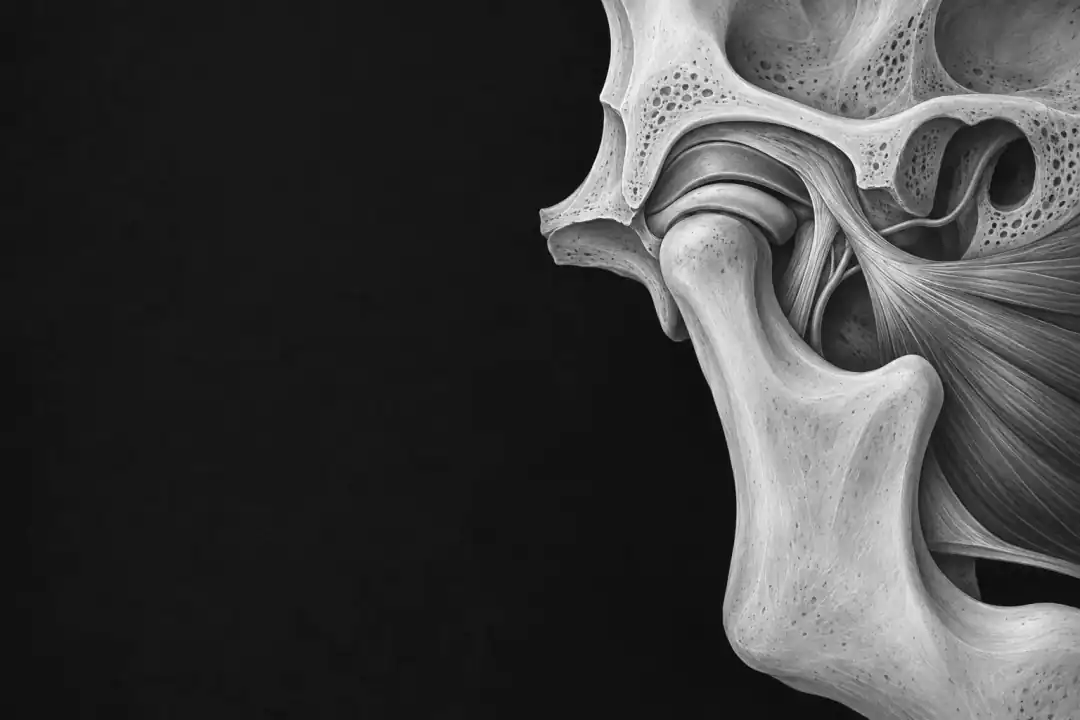
The jaw joint sits just in front of each ear. You use it thousands of times a day to talk, chew and swallow, so when it hurts the pain is hard to ignore.
Some people notice a click every time they open. Others wake with an aching face from clenching, or find the jaw tires halfway through a meal. A few have a jaw that catches and has to be wiggled open. Many have been told it is stress and to stop chewing gum.
At Revive by MWS in Leesburg, jaw problems are the area of the founder's published work. Dr. Shireen Dhanani, DMD, FAGD authored a study on managing TMJ dysfunction with external, non-invasive technology. The evaluation here measures how your jaw opens and moves and examines the joint and muscles, so any plan starts from numbers rather than impressions.
TMJ is the temporomandibular joint itself, and TMD, temporomandibular disorder, is the umbrella term for problems with that joint and the chewing muscles. Most TMD is muscle-related, some involves the disc inside the joint, and a smaller share involves arthritis.
The jaw joint rotates to open a little, then slides forward to open wide. A small disc cushions and guides that slide.
If the disc sits slightly out of place, it pops back as you open. That click is common and often painless.
Clenching and grinding overwork the jaw muscles. They become tender and sore, and they can limit how wide the mouth opens.
Night-time grinding and daytime clenching overwork the jaw muscles. Many people are unaware they do it until a partner or dentist notices.
The small disc inside the joint can move forward, producing clicking. If it stays forward, the jaw may catch or open less.
The TMJ can develop wear-related arthritis like any other joint, with grating sounds and stiffness, especially later in life.
A blow to the chin, a fall or even a long dental appointment with the mouth open wide can strain the joint and muscles.
A forward head posture and periods of stress both increase jaw muscle tension. They often combine with clenching.
We measure how wide you can open, with and without pain. That number becomes the baseline for every review.
We watch the jaw open and close and note any drift or deviation. Clicks and their timing are recorded.
The chewing muscles, the temples and the joint itself are examined for tenderness. Muscle and joint sources lead to different plans.
Dental causes, neck tension and ear problems are considered. Findings outside the jaw lead to the right referral.
Approaches we may consider, depending on what the evaluation finds.
TMJ and TMD at Revive by MWS start with a measured jaw evaluation. Where treatment is indicated, external, non-invasive device care is considered through the TMJ and TMD evaluation service. Electromagnetic therapy is an externally applied option for sore jaw and facial muscles.
01 Opening, tracking and muscle tenderness are measured, and external device treatment is planned where the findings support it.
 02
Pulsed electromagnetic energy is applied externally over the jaw and facial muscles. You stay seated and awake, and there is no recovery time.
Read about externally applied electromagnetic sessions for facial muscle tension.
Jaw problems are often described in vague terms: tight, clicky, sore. Measuring opening in millimeters turns that into a number that can be tracked.
That number is re-measured at each review, so change is visible rather than guessed.
The NIDCR guide to TMD explains the types of temporomandibular disorder, the symptoms and the treatments it recommends starting with.
It favors simple, reversible care first, which matches the order we follow before considering device treatment.
Jaw dysfunction is the area of the founder's published research. That work shaped how the evaluation here is built, with measurement at the center.
First visit
Opening, tracking and tenderness are measured. The plan is based on whether muscle, disc or joint findings dominate.
Weeks 1 to 4
Device sessions, if indicated, run alongside a soft diet, jaw rest habits and gentle exercises. Morning jaw ache is often the first thing to change.
Weeks 4 to 8
Opening exercises progress and normal foods are reintroduced step by step. Clenching habits are tracked through the day.
Around week 8
Opening and tenderness are re-measured against the first visit, and the plan changes if the numbers have not moved.
Results vary by individual.
What to try first, and what should not wait.
Rest the jaw with softer foods for a week or two. Cut food into small pieces, and avoid gum, very chewy foods and wide yawns.
Keep your teeth apart and your jaw relaxed during the day, with the tongue resting on the roof of the mouth. Warmth over the jaw muscles before gentle opening exercises helps many people.
Jaw dysfunction is the area of the practice with published research behind it. Dr. Shireen Dhanani, DMD, FAGD authored the study "A Novel Approach to Temporomandibular Joint (TMJ) Dysfunction Management Using Ultra-Low Frequency HIFES and Synchronized RF: Preliminary Results" and is an EMFACE TMJ Ambassador.
The complimentary consultation includes jaw opening measured in millimeters and a muscle and joint examination.
How the common options compare, including the ones we do not offer.
| Option | At ReviveJaw evaluation with device care | At ReviveElectromagnetic therapy | Night guard or oral splint | Jaw exercises and physical therapy | Pain relievers and muscle relaxants | Joint procedures and surgery |
|---|---|---|---|---|---|---|
| What it involves | Measured opening and external device treatment | External electromagnetic energy over the jaw muscles | A custom appliance worn over the teeth at night | Stretching, posture and relaxation work | Medicines prescribed by your own clinician | Joint washout or surgery by an oral surgeon |
| Typical treatment plan | Evaluation, then a short series | A series of short sessions | Worn nightly over months | Several weeks of home exercise | Short periods during flares | One procedure plus recovery |
| Invasiveness / downtime | Non-invasive, no downtime | Non-invasive, no downtime | Non-invasive | Non-invasive | Oral, may not suit everyone | Invasive, days to weeks of recovery |
| Who it tends to suit | Muscle and joint pain with limited opening | Tender, overworked chewing muscles | Grinding and clenching during sleep | Most jaw muscle problems | Short-term relief of flares | Locking or severe joint damage |
| Offered at Revive? | Offered at Revive | Offered at Revive | Not offered here | Not offered here | Not offered here | Not offered here |
Self-care, a soft diet and jaw exercises help most people, and a night guard from a dentist is a good answer for grinding. Those remain part of the plan whatever else is offered.
Joint procedures and surgery have a place for a jaw that locks or has severe joint damage. When the findings point there, we refer to an oral surgeon.
Getting here from around Lake and Marion County.
Revive by MWS is at 920 E. Dixie Ave. Suite A in Leesburg, near downtown. Patients with jaw pain come from The Villages, Lady Lake, Eustis, Tavares and Mount Dora. Bring any night guard you currently wear so it can be checked.
 The Villages Patients from The Villages
 Lady Lake Patients from Lady Lake
 Ocala Patients from Ocala
 Mount Dora Patients from Mount Dora
 Clermont Patients from Clermont
 Eustis Patients from Eustis
 All areas we serve Lake County and Marion County
Also serving Fruitland Park, Tavares, Belleview, Summerfield, Ocklawaha
TMJ is the name of the jaw joint itself. TMD, temporomandibular disorder, describes problems with that joint and the chewing muscles. People often use TMJ for both, and you may also see the term temporomandibular joint dysfunction.
A painless click with normal opening usually does not. A click with pain, catching or reduced opening is worth evaluating.
Many cases improve with self-care, a softer diet and time. Jaw pain that lasts beyond a few weeks or limits eating deserves an evaluation. Results vary by individual.
Yes. The joint sits right in front of the ear canal, so jaw problems often cause earache or a feeling of fullness without any ear infection.
A dentist or a practice experienced in jaw disorders is a good first stop. Jaw movement should be measured and dental causes checked before any treatment begins.
Tell us what is going on and we will find a time. The first appointment is an evaluation and a conversation, and provider time for it is not charged.
A few details about what hurts and when it started. Nothing is scheduled until we have spoken.
Our team confirms a time that works and tells you what to bring, including any imaging or records.
After the evaluation we explain what we found and which options may help. Results vary by individual, and you decide what happens next.
Send the form and the office team will call you back to confirm a time that works. There is no charge for the consultation and no obligation to start care.
Prefer to call? (352) 559-1901. 920 E. Dixie Ave. Suite A, Leesburg, FL 34748.
The booking form needs JavaScript. If it does not appear, call the clinic and we will book you in.
Revive by MWS is conveniently located to serve patients from Fruitland Park, Lady Lake, Tavares, Mount Dora, and Eustis, as well as the surrounding Lake County area.
Schedule a complimentary consultation with Revive by MWS and we will build an individualized care plan around what we actually find. Provider time for that first evaluation is not charged.
Book a complimentary consultationBook your consultationYour privacy choices
We use cookies and analytics to see how this site is used. Nothing optional runs until you choose. Privacy policy