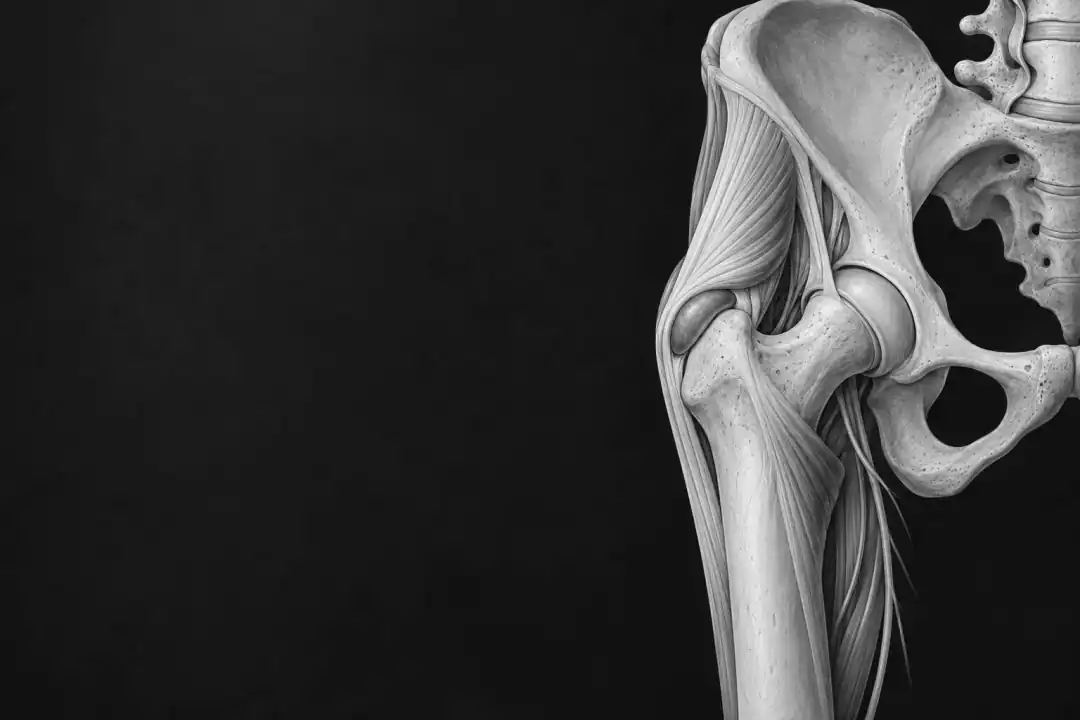
Quick summary Hip pain usually comes from one of three places. Groin pain points to the hip joint, outer hip pain to the tendons and bursa, and buttock pain to the lower back or pelvis. Revive by MWS in Leesburg finds the source first, then considers orthobiologic, A2M or PRP options for the structure involved.
People say hip pain and point to very different places. Some cup the front of the groin. Some press the bony point on the outside of the thigh. Others rub the back of the buttock.
Those three places usually mean three different problems. Groin pain tends to come from the hip joint. Outer hip pain is often the tendons and bursa that cushion the side of the hip. Buttock pain frequently starts in the lower back or the sacroiliac joint.
At Revive by MWS in Leesburg the first job is working out which one you have. The treatments that help an arthritic joint are not the same as the ones that help an irritated tendon, and treating the wrong structure wastes time. Once the source is clear, the options become straightforward to explain.
Understanding Hip Pain
Hip pain is a symptom with several sources. Groin pain usually comes from the hip joint and outer hip pain from the gluteal tendons and bursa. Buttock pain often starts in the lower back or pelvis. The location is the first clue to the cause.
How it works
Groin pain points to the joint
The ball and socket sit deep behind the groin crease. Joint problems such as arthritis hurt there, often with stiffness putting on socks.
Outer hip pain points to tendons
The gluteal tendons attach to the bony point on the side of the hip. Irritation there hurts when lying on that side or climbing stairs.
Buttock pain often comes from above
The lower back and sacroiliac joint refer pain into the buttock. The hip joint itself rarely hurts only at the back.
Who this care helps
- Groin or outer hip pain lasting more than six weeks
- Pain lying on one side at night
- Stiffness putting on shoes and socks
- People told they have early hip arthritis or tendon irritation
- Those wanting non-surgical care before a hip replacement discussion
Who it does not help
- Hip pain after a fall with difficulty standing, which can be a fracture
- Sudden severe hip pain with fever
- Pain that is constant, severe at night and unaffected by position
- A history of long-term steroid use with new deep groin pain, until imaged
Common Symptoms
- Deep aching in the groin, sometimes spreading to the knee
- Tenderness on the bony point at the side of the hip
- Pain lying on the affected side at night
- Stiffness putting on socks, shoes or cutting toenails
- Pain climbing stairs or getting out of a low chair
- A limp after walking a distance
- Clicking or catching in the front of the hip
- Aching in the buttock after sitting
Common Causes
01 Hip joint arthritis
Wear in the ball and socket causes groin pain and stiffness, especially turning the leg inward. It is the most common cause of groin pain after fifty.
02 Gluteal tendinopathy and bursitis
Irritation of the tendons and bursa on the outer hip is very common, particularly in women over fifty. Crossing the legs and side-lying aggravate it.
03 Labral tears
The rim of cartilage around the socket can tear. It causes catching, clicking and groin pain, often with pivoting movements.
04 Referral from the lower back
Irritated lumbar joints and nerve roots refer pain into the buttock and side of the hip. The back is always checked for that reason.
05 Muscle weakness and walking pattern
Weak hip muscles let the pelvis drop with each step, loading the outer hip tendons. The walking pattern shows it clearly.
How Revive Evaluates Hip Pain
- 01
Where you point
We ask you to put one finger where it hurts most. Groin, outer hip and buttock pain narrow the likely causes right away.
- 02
Rotation and hip joint tests
Turning the hip inward and bending it toward the opposite shoulder loads the joint. Groin pain on those tests points to the joint itself.
- 03
Tendon loading on the outer hip
Standing on one leg and pressing on the side of the hip test the gluteal tendons. Ultrasound can confirm tendon changes.
- 04
A lower back screen
Back movement and a nerve check rule referred pain in or out. Many buttock and side-of-hip complaints start there.
Treatment Options We May Consider
Approaches we may consider, depending on what the evaluation finds.
Hip pain at Revive by MWS is treated according to its source. Orthobiologic placement and A2M are considered for the hip joint, and PRP or PRF for irritated outer hip tendons. Each is placed under imaging guidance once the evaluation confirms the target.
 01
Orthobiologic placement inside the hip joint
02 A2M when joint wear is the finding
03 PRP or PRF for outer hip tendons
Start with where it hurts
The quickest route to a hip diagnosis is asking where it hurts most. Groin pain, outer hip pain and
buttock pain lead to different examinations and very different plans.
What the evidence says about hip pain
The MedlinePlus encyclopedia entry on hip pain
lists the common causes of hip pain, from arthritis and bursitis to back problems, and the
situations that need prompt care.
Its list mirrors how we examine the hip: the location and the pattern come first, and they decide
what happens next.
Where surgery fits
Hip replacement is the right answer for advanced arthritis that limits daily life. Non-surgical care
is for earlier stages and for tendon pain, and we will tell you which side of that line you are on.
What a Typical Treatment Plan Looks Like
- 01
Confirming the source
First visit
The examination and, where useful, ultrasound identify whether the joint, the tendons or the back is the main driver. The plan follows that finding.
- 02
Settling the irritation
Weeks 1 to 4
Any placement is followed by a short period of reduced load. Strengthening starts gently, and side-lying and crossed legs are avoided.
- 03
Rebuilding strength
Weeks 4 to 10
Hip and trunk strength work progresses step by step. Walking distance and stairs are the measures we watch.
- 04
Review and maintenance
Around week 12
Walking, stairs and night comfort are compared with the first visit. If progress has stalled, the plan is adjusted or a referral is made.
Results vary by individual.
What to Try First, and When to Seek Care
What to try first, and what should not wait.
Keep walking, but on flat ground and in shorter stretches. Avoid crossing your legs and sleep with a pillow between your knees if the outer hip is sore.
Sit in higher chairs and use the handrail on stairs during a flare. Simple hip strengthening, such as bridges and side-lying leg lifts, helps most hip problems.
Signs that should not wait
- Hip pain after a fall with difficulty standing or walking, which may be a fracture
- Hip pain with fever, chills or a hot, swollen joint
- Pain that is severe at night and not eased by any position
- Sudden groin pain in someone who has taken steroids long-term
What Determines the Cost of Care for Hip Pain
Cost depends on which structure the evaluation identifies, which preparation is appropriate and whether imaging guidance is used. Prices are not published, and every figure is explained in person first.
- Whether the joint, the tendons or both are being treated
- Which preparation the evaluation supports
- Whether ultrasound guidance is used for placement
- How many placements the individualized plan includes
We do not publish pricing. Cost depends on the plan built for you, and it is explained in full before anything is scheduled.
Expert Care for Hip Pain in Leesburg
Hip pain is often treated as one problem when it is really three. The evaluation here separates joint, tendon and back sources before anything is recommended.
The complimentary consultation includes hip rotation measurements and a lower back screen.
Further reading: the MedlinePlus encyclopedia entry on hip pain
Updated September 25, 2026