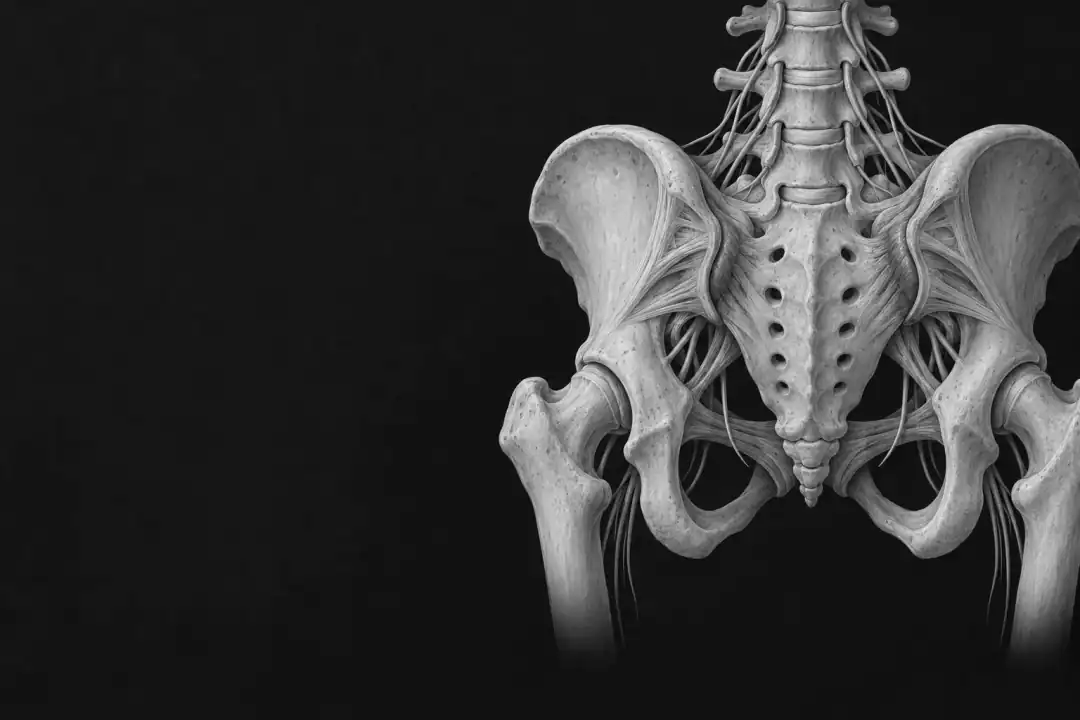
Quick summary Sacroiliac joint pain comes from the joint linking the base of the spine to the pelvis. It usually causes one-sided pain low in the back and buttock, worse on stairs, rolling in bed or standing on one leg. Revive by MWS in Leesburg confirms it with provocation tests, then considers orthobiologic, platelet or shockwave options.
Sacroiliac pain has a signature. People point with one finger to a spot just below the belt line, beside the small dimple at the back of the pelvis. It is usually on one side only.
It flares getting out of a car, climbing stairs, rolling over in bed or standing on one leg to put on pants. Sitting on the affected side can be uncomfortable, and a long walk may leave the buttock aching.
The sacroiliac joint is responsible for a meaningful share of low back pain. It is often missed because the pain can travel into the buttock and thigh like sciatica. At Revive by MWS in Leesburg we use a group of provocation tests to confirm the joint is the source before any treatment. That step alone prevents many wasted months.
Understanding Sacroiliac Joint Pain
The sacroiliac joints connect the sacrum at the base of the spine to the two sides of the pelvis. They move only slightly but carry the load of the upper body into the legs. Pain from strain, irritation or wear in the joint and its strong ligaments is called sacroiliac joint dysfunction.
How it works
A small-moving, heavily loaded joint
The joint moves only a few millimeters, held by some of the strongest ligaments in the body. It transfers weight with every step.
Uneven load irritates it
A limp, a leg length difference or a stiff hip on one side loads one joint more. Over time that side becomes sore.
Pain refers into the buttock
The joint sends pain into the buttock and back of the thigh. It rarely travels below the knee, which helps separate it from sciatica.
Who this care helps
- One-sided pain just below the belt line at the back
- Pain rolling in bed, climbing stairs or getting out of a car
- Discomfort standing on one leg
- Pain after a fall onto the buttock or after pregnancy
- People whose back imaging does not explain the pain
Who it does not help
- Pain in both buttocks with long morning stiffness in a younger adult, which suggests an inflammatory cause
- Pain that travels below the knee with numbness or weakness
- Pelvic pain after a fall with difficulty walking, until a fracture is ruled out
- Pain with fever or feeling generally unwell
Common Symptoms
- Pain on one side just below the belt line at the back
- Aching in the buttock and back of the thigh
- Pain climbing stairs or stepping up
- A sharp catch when rolling over in bed
- Pain getting in and out of a car
- Discomfort sitting on the affected side
- Pain standing on one leg to dress
- Stiffness after sitting that eases with walking
Common Causes
01 A fall onto the buttock
Landing hard on one side jars the joint and its ligaments. Pain may start days later and linger for months.
02 Uneven walking and leg length
A limp from a painful knee or hip, or a leg length difference, loads one joint more than the other with every step.
03 Previous spinal fusion
A fused lower back passes more movement to the sacroiliac joints. Pain there is common in the years after lumbar fusion.
04 Pregnancy and hormonal changes
Ligaments loosen in pregnancy, and some women continue to feel the joint long afterward. The history often goes back decades.
05 Wear and inflammatory conditions
The joint can develop arthritis with age. Inflammatory conditions such as ankylosing spondylitis affect it too and need a rheumatologist.
How Revive Evaluates Sacroiliac Joint Pain
- 01
The one-finger test
We ask you to point to the pain. A finger placed within a few centimeters of the pelvic dimple is a strong first clue.
- 02
A cluster of provocation tests
Several gentle tests stress the joint from different directions. Pain on three or more makes the joint the likely source.
- 03
Ruling out the spine and hip
Back movement, nerve tests and hip rotation are checked. Lumbar and hip problems often mimic sacroiliac pain.
- 04
Walking and leg length
We watch you walk and check for a leg length difference or limp. Fixing uneven load is part of most plans.
Treatment Options We May Consider
Approaches we may consider, depending on what the evaluation finds.
Sacroiliac joint pain at Revive by MWS is treated once provocation testing confirms the joint. Orthobiologic placement and PRP or PRF are considered for the joint and its ligaments, and shockwave where the surrounding muscles and ligaments dominate.
 01
Orthobiologic placement in the sacroiliac joint
02 PRP or PRF for the supporting ligaments
 03
Shockwave for muscles and soft tissue
Why the SI joint is often missed
Sacroiliac pain sits where back pain, hip pain and sciatica overlap. Imaging often looks normal, so
the joint gets overlooked unless someone tests it directly.
A cluster of hands-on tests is the most reliable way to identify it without a procedure.
What the evidence says about sacroiliac pain
The Cleveland Clinic overview of sacroiliitis
explains the causes of sacroiliac joint inflammation, the symptoms and the range of treatments.
It reflects our order of care: exercise and activity changes first, with targeted treatment for pain
that persists.
What to Try First, and When to Seek Care
What to try first, and what should not wait.
Keep the knees together when getting in and out of a car or bed, turning the body as one unit. Take stairs one step at a time during a flare.
Avoid standing with your weight on one leg. Gentle core and hip strengthening, such as bridges, helps stabilize the joint over a few weeks.
Signs that should not wait
- Pelvic or buttock pain after a fall with difficulty walking
- Pain with fever, chills or feeling generally unwell
- Numbness or weakness in a leg, or pain traveling below the knee
- Loss of bladder or bowel control, which needs emergency care
Expert Care for Sacroiliac Joint Pain in Leesburg
Sacroiliac pain is often missed or mistaken for disc or hip pain. The evaluation here uses a cluster of provocation tests and checks the spine and hip before the joint is treated.
The complimentary consultation includes the provocation tests and a walking assessment.
Further reading: the Cleveland Clinic overview of sacroiliitis
Updated September 25, 2026