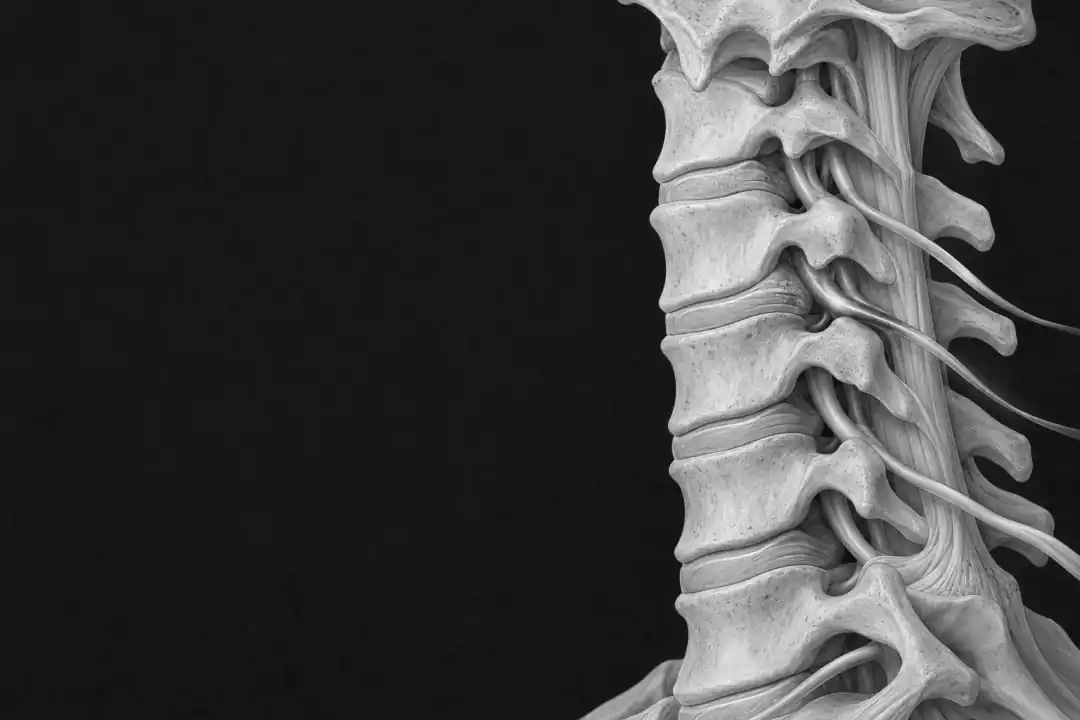
Quick summary Radiculopathy is irritation or compression of a nerve root where it leaves the spine, often called a pinched nerve. It causes pain, tingling, numbness or weakness along that nerve's path in an arm or leg. Revive by MWS in Leesburg maps the affected level, then considers spinal decompression or orthobiologic care.
A pinched nerve in the neck rarely feels like a neck problem. It feels like an arm problem. Burning across the shoulder blade, tingling in two fingers, a grip that drops a coffee cup. In the lower back the same thing happens in the leg.
Each nerve root supplies its own strip of skin and its own set of muscles. That makes the pattern of symptoms a map. Tingling in the thumb and index finger points to one level in the neck. Numbness on the top of the foot points to one level in the lower back.
At Revive by MWS in Leesburg we read that map with a full nerve examination, then compare it with your imaging. Most radiculopathy improves without surgery. Our job is to find the level, check for anything urgent and choose care that suits what is pressing on the nerve.
Understanding Radiculopathy and Pinched Nerve
Radiculopathy happens when a spinal nerve root is compressed or inflamed as it exits the spine. In the neck it produces arm symptoms, and in the lower back leg symptoms. The cause is usually a disc, a bone spur or narrowing of the exit channel.
How it works
Each root has an exit channel
Nerve roots leave the spine through small openings between the vertebrae. Anything that narrows an opening can press on the root inside it.
Pressure and chemicals both irritate
A root can be squeezed by bone or disc, and also inflamed by chemicals released from a damaged disc. Both produce symptoms along the nerve.
Symptoms follow a set pattern
Each root serves particular skin and muscles. The pattern of numbness and weakness points to the level involved.
Who this care helps
- Arm or leg pain, tingling or numbness following a nerve pattern
- Symptoms made worse by certain neck or back positions
- Imaging showing narrowing or a disc at a level that matches
- Symptoms of more than six weeks without progressive weakness
- People wanting non-surgical care before a surgical opinion
Who it does not help
- Weakness that is getting worse, such as foot drop or a weakening grip
- Clumsy hands, trouble with buttons or unsteady walking, which can mean spinal cord pressure
- Loss of bladder or bowel control, which is an emergency
- Symptoms in both arms or both legs at once
Common Symptoms
- Pain radiating from the neck into the shoulder blade and arm
- Tingling or numbness in specific fingers
- Pain radiating from the lower back into one leg or foot
- Weakness in grip, or lifting the foot or big toe
- Burning or electric sensations along the nerve's path
- Symptoms that change with neck turning or back bending
- Relief from resting the hand on top of the head
- Reduced reflexes at the elbow, knee or ankle
Common Causes
01 Bone spurs narrowing the exit channel
Age-related bone spurs around the disc and facet joints shrink the openings where roots exit. This is the most common cause after sixty.
02 A disc pressing on the root
A herniated disc can press on or inflame a nearby root. It is more common in people under sixty and often follows lifting or bending.
03 Thickened ligaments and joints
Ligaments inside the spinal canal thicken with age, and facet joints enlarge. Both reduce the space around the nerve roots.
04 A slipped vertebra
When one vertebra slides forward on the one below, the exit channel narrows. This is called spondylolisthesis.
05 Less common causes
Infection, tumors and cysts are rare causes of nerve root pressure. Night pain, fever or weight loss prompts further investigation.
How Revive Evaluates Radiculopathy and Pinched Nerve
- 01
Mapping the symptoms
We chart exactly where the pain, tingling and numbness reach. The map points to a specific nerve root level.
- 02
Strength muscle by muscle
Each root powers particular muscles. Testing them one at a time confirms the level and shows whether weakness is present.
- 03
Reflexes and nerve stretch tests
Reflexes at the elbow, knee and ankle, plus positions that stretch the nerve, add further evidence for the level involved.
- 04
Checking for cord compression
Hand coordination, walking balance and brisk reflexes are checked. Signs of spinal cord pressure lead to urgent referral.
Treatment Options We May Consider
Approaches we may consider, depending on what the evaluation finds.
Radiculopathy at Revive by MWS is treated according to what is compressing the nerve root. Spinal decompression is considered where a disc or narrowing responds to unloading, and orthobiologic placement where irritated facet joints next to the root add to symptoms.
 01
Decompression to unload a pinched root
 02
Orthobiologic care for joints beside the root
Reading the symptom map
The pattern of numbness and weakness is one of the most reliable clues in medicine. Thumb and index
finger, middle finger, or little finger each point to a different neck level.
The same is true in the leg. That is why the first visit spends time charting exactly where the
symptoms go.
What the evidence says about radiculopathy
The Johns Hopkins Medicine overview of radiculopathy
explains the causes, the symptoms at each level of the spine and the non-surgical and surgical
options.
It supports the approach we take: most people improve with non-surgical care, and surgery is kept
for worsening weakness or pain that does not settle.
What to Try First, and When to Seek Care
What to try first, and what should not wait.
Find positions that ease the arm or leg symptoms and use them often. For neck-related arm pain, resting the hand on top of the head relieves many people.
Stay gently active and avoid long periods in the position that provokes symptoms, such as looking down at a phone. Short walks help most back-related leg symptoms.
Signs that should not wait
- Weakness in the hand, arm, foot or leg that is getting worse
- Clumsy hands, trouble with buttons or a change in walking balance
- Loss of bladder or bowel control, or numbness in the saddle area
- Nerve pain with fever, unexplained weight loss or a cancer history
Expert Care for Radiculopathy and Pinched Nerve in Leesburg
A pinched nerve needs a careful nerve examination at every visit. Worsening weakness or signs of spinal cord pressure change the plan to an urgent referral, and we check for both.
The complimentary consultation includes a full strength, reflex and sensation examination.
Further reading: the Johns Hopkins Medicine overview of radiculopathy
Updated September 25, 2026