
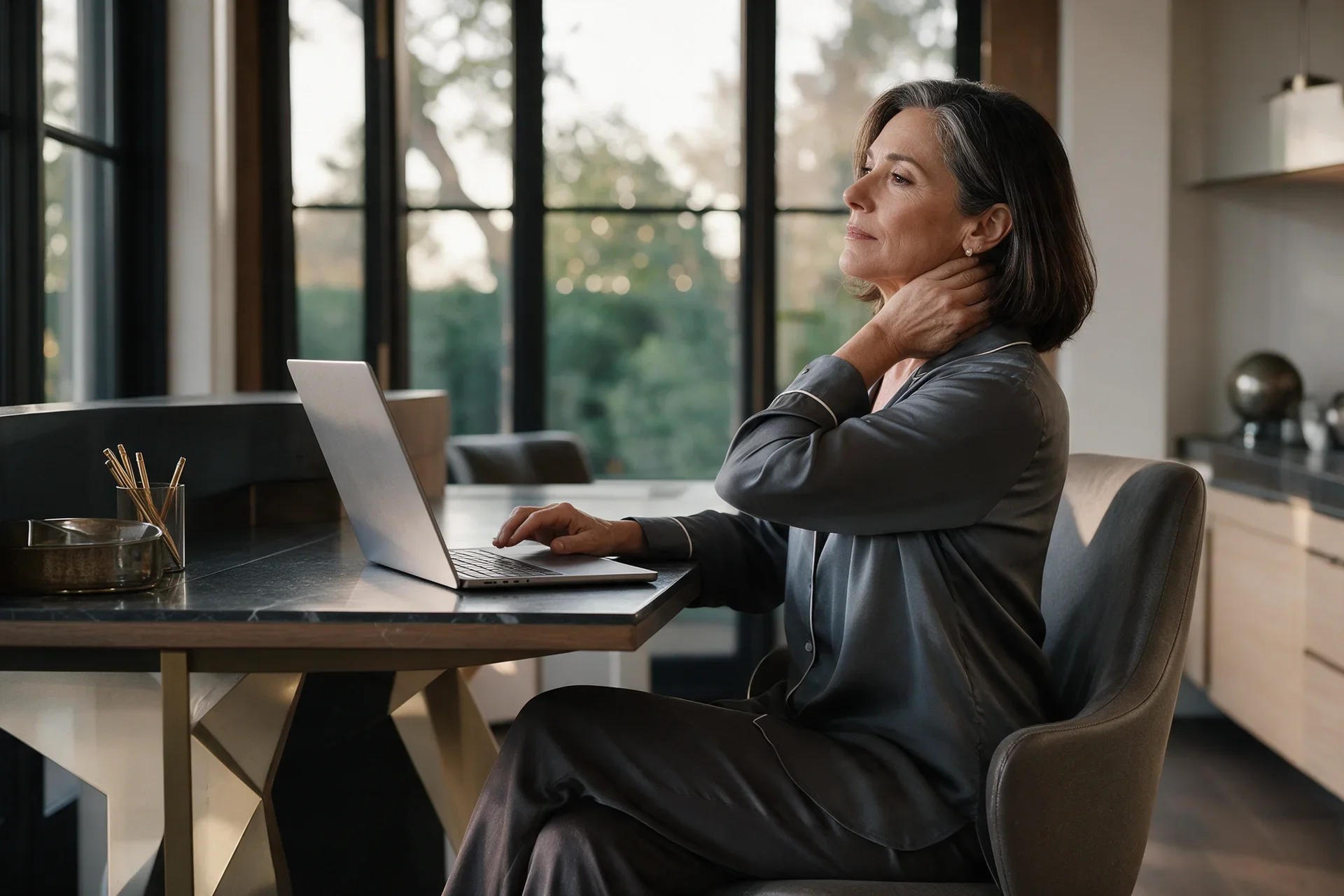
Back Pain Treatment in Leesburg, FL
Most low back pain settles. The kind that brings people here is the kind that did not. Care starts with working out which structure is producing it, because the answer changes the treatment completely.
- Non-surgical approach
- Sessions of 20 to 45 minutes
- Complimentary evaluation
Low back pain that lasts beyond a few weeks usually comes from a disc, a facet joint, the sacroiliac joint or the muscles around them. Non-surgical care at Revive by MWS in Leesburg uses spinal decompression and, where indicated, orthobiologic or device treatment, after evaluation.
Back pain that lasts more than six weeks stops behaving like an injury and starts behaving like a problem. The flare pattern changes, sleep goes, and activities drop off one at a time.
By the time people come here, most have had imaging, a course of medication and often physical therapy. The useful question is no longer whether something is wrong. It is which structure is producing the pain, because a compressed disc, an irritated facet joint and an unhappy sacroiliac joint all hurt in the low back and none of them respond to the same treatment.
Revive by MWS is on Dixie Avenue in Leesburg, and the evaluation for back pain takes about an hour.
Understanding Back Pain
Persistent low back pain usually comes from one of four sources: a disc under load, the small facet joints at the back of the spine, the sacroiliac joint at the pelvis, or the muscles working overtime around any of them. Identifying which one changes the plan.
How it works
Discs behave badly under sustained load
Sitting and bending forward load the front of the disc. Disc-driven pain is typically worse on sitting and worse first thing, and it often eases with walking.
Facet joints complain about extension
The small joints at the back of the spine are loaded by standing, leaning back and walking downhill. Facet pain usually eases on sitting, which is the opposite pattern.
Muscles guard around whatever hurts
Whichever structure is the source, the muscles around it tighten to protect it. That guarding produces its own pain, and it is often what the patient actually feels.
Who this care helps
- Adults whose pain has lasted more than six weeks
- People with a clear pattern of what makes it better and worse
- Pain that eases on lying down
- Those who have tried medication and therapy without lasting change
- Patients who want a non-surgical option before a surgical opinion
Who it does not help
- Back pain after a significant fall or collision that has not been imaged
- Back pain with fever or unexplained weight loss
- Pain that is constant, unrelieved by any position and worse at night
- Any change in bladder or bowel control, which needs urgent care
Common Symptoms
- Aching across the low back that has lasted weeks
- Stiffness in the morning that takes time to ease
- Pain that worsens on sitting, or worsens on standing, in a consistent pattern
- Difficulty bending to shoes or to the bottom shelf
- Pain that travels into the buttock
- A sense that the back will give way when you lift
- Disturbed sleep because no position is comfortable for long
- Reduced walking distance compared with a year ago
Common Causes
Disc degeneration and bulging
Discs lose water content with age and handle load less well. A bulging or degenerate disc is a common finding on imaging after fifty and is not always the source of pain, which is why the examination matters.
Facet joint arthritis
The small paired joints at the back of each spinal segment wear like any other joint. Pain is typically worse standing and walking, and eases when you sit or lean on a trolley.
Sacroiliac joint irritation
The joint between the pelvis and the base of the spine can become painful after a fall, after pregnancy or with altered walking patterns. It often presents as one-sided pain in the buttock.
Muscle guarding and deconditioning
When the back has hurt for months the supporting muscles weaken and the surface muscles take over. That imbalance produces its own pain and makes flares more frequent.
Load from elsewhere in the chain
A stiff hip, an arthritic knee or a limp changes how force travels through the pelvis. Back pain is frequently the place where a problem lower down shows up.
How Revive Evaluates Back Pain
What makes it better and worse
This is the most informative question in the assessment. A pain that eases on sitting and one that worsens on sitting point to different structures.
How you move and load the spine
We watch bending, standing from a chair and walking, then test movements that load each candidate structure in turn.
A nerve screen
Power, reflexes and sensation in the legs, because leg symptoms change the priority and some findings need urgent referral rather than treatment.
What your imaging actually shows
We go through your scans with you. A great many reports describe changes that are normal for your age, and that is worth hearing out loud.
Treatment Options We May Consider
Approaches we may consider, depending on what the evaluation finds.
Back pain at Revive by MWS is treated according to which structure the evaluation implicates. Spinal decompression addresses compressive and disc-driven pain, orthobiologic placement is considered for joint-driven pain, and shockwave is used where muscle and soft tissue dominate.
Decompression for disc-driven pain
Motorized traction applied in cycles across the lumbar spine, in sessions of 20 to 45 minutes over several weeks. It suits pain that eases when you lie down.
Read what a course of spinal decompression actually involves.
Orthobiologic placement for joint-driven pain
Where facet or sacroiliac joints are the source, a preparation from your own blood may be placed under imaging guidance.
Read how orthobiologic preparations are evaluated and placed.
Shockwave for muscle and soft tissue
Where persistent muscle guarding and soft-tissue pain dominate, acoustic therapy is applied over the area as part of a wider plan.
Why the pattern matters more than the scan
Two people with identical lumbar MRIs can have completely different problems. The thing that separates them is the pattern: what makes it worse, what makes it better, and what time of day it is at its worst.
That pattern is the most informative part of the evaluation, and it takes ten minutes of conversation rather than an imaging referral.
What the evidence says about persistent back pain
The NIAMS overview of back pain sets out the usual causes, what generally helps and what the evidence supports for chronic cases.
Its headline point is the one we start from: for most persistent back pain, staying active and building tolerance does more than any passive treatment, and treatment exists to make that possible.
Where treatment genuinely adds something
A back that hurts too much to move cannot build tolerance. Decompression, injection and device work exist to open that window.
None of them is a substitute for what you do in it. Every plan written here says what the treatment is for and what you are expected to do alongside it.
What a Typical Course Looks Like
Getting the flare down
Weeks 1 to 2
Early sessions focus on settling the pain enough to move. Most people notice changes in sitting and standing tolerance before they notice a change in pain score.
Building tolerance
Weeks 3 to 6
Treatment continues while loading work is added. This is the phase where walking distance usually starts to move.
The review point
Around week 8
We re-measure sitting, standing and walking tolerance against the first visit. If they have not moved, the plan changes rather than continuing.
Keeping it
Ongoing
Maintenance for a back is almost always exercise rather than treatment. Results vary by individual, and flares are managed rather than treated as failures.
Results vary by individual.
What to Try First, and When to Seek Care
What to try first, and what should not wait.
For a back that has hurt for a few weeks, staying active is more useful than resting. Short, frequent walks beat one long one, and complete rest tends to make the second week worse.
Change position often. If sitting is the problem, stand every twenty minutes. If standing is the problem, sit for a short break rather than pushing through. Heat before movement and a simple painkiller you already tolerate are both reasonable.
Signs that should not wait
- Loss of control of your bladder or bowels, or numbness around the saddle area, which needs emergency care now
- Weakness in a leg that is getting worse rather than better
- Back pain with fever, chills or unexplained weight loss
- Constant pain that wakes you and is not relieved by any position
What Determines the Cost of Care for Back Pain
Cost depends on which treatment the evaluation supports, how many sessions the plan involves and whether imaging guidance is needed. We do not publish prices.
- Whether decompression, injection or device therapy is indicated
- How many sessions the individualized plan includes
- Whether imaging is required before starting
- Whether more than one structure is being addressed
We do not publish pricing. Cost depends on the plan built for you, and it is explained in full before anything is scheduled.
Expert Care for Back Pain in Leesburg
Back pain is the condition most often over-treated and most often under-examined. The evaluation here is built to work out which structure is producing the pain before anything is recommended.
Care at Revive by MWS is provided by licensed clinicians. The complimentary consultation includes a nerve screen and a review of your existing imaging.
Care at Revive by MWS is provided by licensed clinicians.
Back Pain: How the Options Compare
How the common options compare, including the ones we do not offer.
| Option | What it involves | Typical course | Invasiveness / downtime | Who it tends to suit | Offered at Revive? |
|---|---|---|---|---|---|
| Spinal decompression | Motorized traction in cycles | A series over several weeks | Non-invasive, no downtime | Disc-driven pain that eases lying down | Yes |
| Orthobiologic injection | A preparation from your own blood placed under imaging | One placement, then review | Needle procedure, sore days | Facet and sacroiliac joint pain | Yes |
| Shockwave therapy | Acoustic pressure waves over the area | A short weekly series | Non-invasive, no downtime | Persistent muscle and soft-tissue pain | Yes |
| Physical therapy | Graded exercise and manual treatment | Several weeks of visits | Non-invasive | Almost every back problem at some stage | No |
| Epidural steroid injection | Steroid placed near the irritated nerve root | One to three injections | Needle procedure under imaging | Severe leg pain from nerve irritation | No |
| Spinal surgery | Decompression or fusion of the affected level | One operation plus rehabilitation | Invasive, months of recovery | Progressive weakness or long-failed care | No |
Exercise remains the treatment with the best long-term evidence for persistent back pain, and nothing on this page replaces it. Every plan written here includes it.
Surgery is the right answer for progressive weakness and for a small number of structural problems. We refer for it rather than compete with it.
Serving Lake and Marion County
Getting here from around Lake and Marion County.
The clinic is at 920 E. Dixie Ave., Suite A in Leesburg, near downtown and a few minutes from Lake-Sumter State College. Parking is at the door and the entrance is step-free, which matters when sitting in a car is already uncomfortable.
- Leesburg
- The Villages
- Lady Lake
- Fruitland Park
- Tavares
- Eustis
- Mount Dora
- Clermont
- Ocala
- Belleview
- Summerfield
- Ocklawaha
Back Pain: Frequently Asked Questions
Disc bulges and degenerative change are extremely common after fifty and are found in plenty of people with no pain at all. That is why the examination carries more weight than the report when we decide what to treat.
Not beyond a day or two. Staying gently active is better supported and tends to shorten the episode. Short, frequent walks are the practical version.
By pattern. Pain that eases on lying down and worsens on sitting usually points to the disc and to decompression. Pain that eases on sitting and worsens on standing points more towards the facet joints.
Any change in bladder or bowel control, or numbness around the saddle area, needs emergency care. So does leg weakness that is worsening, or back pain with fever or unexplained weight loss.
Which treatment your evaluation supports, how many sessions are planned, whether imaging is needed and whether more than one structure is involved. Cost is explained in person before any commitment.
Schedule Your Back Pain Evaluation
Tell us what is going on and we will find a time. The first appointment is an evaluation and a conversation, and provider time for it is not charged.
- 01
You send the request
A few details about what hurts and when it started. Nothing is scheduled until we have spoken.
- 02
We call you back
Our team confirms a time that works and tells you what to bring, including any imaging or records.
- 03
You decide
After the evaluation we explain what we found and which options may help. Results vary by individual, and you decide what happens next.
Send the form and the office team will call you back to confirm a time that works. There is no charge for the consultation and no obligation to start care.
Prefer to call? (352) 559-1901. 920 E. Dixie Ave. Suite A, Leesburg, FL 34748.
The booking form needs JavaScript. If it does not appear, call the clinic and we will book you in.
Visit Revive by MWS in Leesburg
920 E. Dixie Ave. Suite ALeesburg, FL 34748
(352) 559-1901
| Monday | 8:00 AM to 5:00 PM |
|---|---|
| Tuesday | 8:00 AM to 5:00 PM |
| Wednesday | 8:00 AM to 5:00 PM |
| Thursday | 9:00 AM to 6:00 PM |
| Friday | 8:00 AM to 5:00 PM |
| Saturday | By appointment |
| Sunday | Closed |
Schedule a complimentary consultation with Revive by MWS and we will build an individualized care plan around what we actually find. Provider time for that first evaluation is not charged.
Book a complimentary consultation