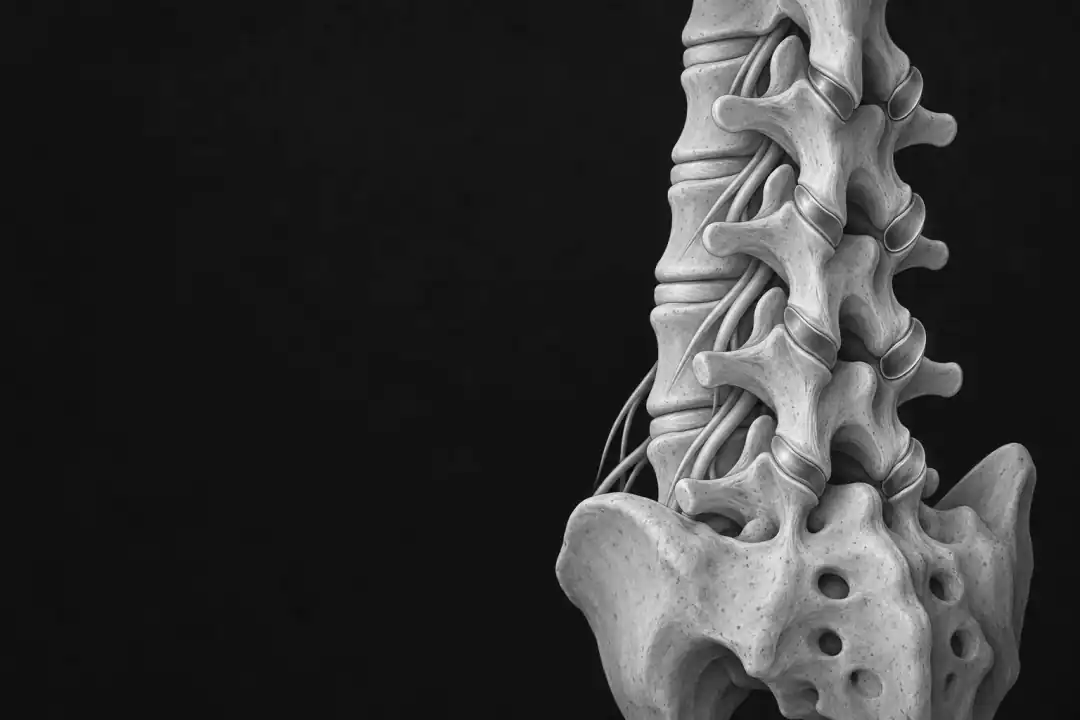
Quick summary Spondylosis is age-related wear in the spine, and facet arthritis is wear in the small paired joints at the back of each spinal segment. Both cause stiffness and aching that ease with gentle movement. Revive by MWS in Leesburg considers orthobiologic placement or spinal decompression after an examination identifies the level involved.
An X-ray report that mentions spondylosis, facet hypertrophy or degenerative change is describing something most people over sixty have. Those words do not mean the spine is failing. They mean it has aged, much like the knees and hands.
Some people with these changes have no pain at all. Others wake stiff every morning. Standing at the sink or looking up at a ceiling fan makes the ache build, and moving or sitting down eases it.
At Revive by MWS in Leesburg we work out whether the facet joints are the source. A disc, a nerve or the surrounding muscles may be doing more of the work. That distinction shapes the plan. It also explains why two people with the same X-ray can need very different care.
Understanding Facet Arthritis and Spondylosis
Spondylosis is the general term for age-related change in the spine's discs, joints and bone. Facet arthritis is the joint part of it: the small paired joints at the back of each segment wear, stiffen and can grow bone spurs. Pain usually comes from those joints being loaded.
How it works
Each segment has three joints
A disc sits at the front and two small facet joints at the back. As the disc thins with age, the facet joints carry more of the load.
The joints wear like any other
Facet cartilage thins and the joint lining thickens. Small bone spurs form at the edges, and the joint becomes stiffer.
Leaning back loads them most
Standing, arching backward and looking up press the facet joints together. That is why facet pain often eases when you sit or lean forward.
Who this care helps
- Morning stiffness in the neck or low back that eases with movement
- Aching that builds with standing, arching back or looking up
- Pain on one or both sides of the spine rather than in the middle
- Imaging that shows facet or degenerative change matching the symptoms
- People wanting non-surgical care before a spine surgery opinion
Who it does not help
- Arm or leg weakness that is worsening
- Clumsy hands, dropping things or a change in walking balance, which can mean neck cord pressure
- Back pain with fever, cancer history or unexplained weight loss
- Loss of bladder or bowel control, which is an emergency
Common Symptoms
- Stiffness on waking that eases within the first hour
- Aching on one or both sides of the spine
- Pain that builds when standing still or arching backward
- Neck ache when looking up or backing out of the driveway
- Relief when sitting or leaning forward on a cart
- Grinding or creaking with neck movement
- Pain spreading into the buttock or shoulder blade, but not past the knee or elbow
- Stiffness after long car rides
Common Causes
01 Normal aging of the spine
Discs lose height and facet joints wear with every decade. Changes are visible on most X-rays after sixty, with or without symptoms.
02 Disc thinning shifting the load
A thinner disc lets the segment settle, pushing more weight onto the facet joints behind it. Facet arthritis often follows disc wear at the same level.
03 Previous injuries and heavy work
Years of lifting, a past whiplash or a fall can speed up wear at particular levels of the spine.
04 Posture that keeps the spine extended
Long periods looking up, standing with the lower back arched or sleeping on the stomach keep the facet joints compressed.
05 Weight and weak trunk muscles
Extra body weight and weak core and hip muscles increase the load the spinal joints take with every step.
How Revive Evaluates Facet Arthritis and Spondylosis
- 01
The extension and rotation test
We ask you to lean back and turn to each side. Pain that reproduces on the same side points toward a facet joint at that level.
- 02
Pressing on individual segments
Gentle pressure over each level helps locate the sore joint. Tenderness to one side of the midline is typical of facet pain.
- 03
Screening the nerves and spinal cord
Reflexes, strength, sensation and hand coordination are checked. Signs of cord or nerve pressure change the priority of care.
- 04
Matching the imaging to the exam
We compare your X-ray or MRI with the level the examination points to. The worst-looking level is not always the painful one.
Treatment Options We May Consider
Approaches we may consider, depending on what the evaluation finds.
Facet arthritis and spondylosis at Revive by MWS are treated according to which structure is driving the pain. Orthobiologic placement is considered for a painful facet joint, and spinal decompression where disc wear at the same level contributes to symptoms.
 01
Orthobiologic placement at a painful facet joint
 02
Decompression where disc wear adds to it
Why the same X-ray can mean different things
Spinal wear appears on most X-rays taken after sixty. The report may list several levels with
degenerative change, yet only one of them may be painful.
That is why we test each level by hand before we recommend anything. Treatment follows the joint
that hurts, not the one that looks worst.
What the evidence says about facet joint arthritis
The Hospital for Special Surgery article on facet joint arthritis
explains how the facet joints wear, the symptoms they produce and the range of treatments used.
It reflects the approach we take: exercise and activity changes first, with targeted procedures
considered for pain that persists.
What to Try First, and When to Seek Care
What to try first, and what should not wait.
Gentle movement first thing in the morning, such as a warm shower followed by slow bends and turns, eases the stiffness for most people.
Break up long periods of standing, and avoid sleeping on your stomach. Walking, swimming and strength work for the trunk and hips help over weeks.
Signs that should not wait
- New clumsiness in the hands or a change in balance when walking
- Weakness in an arm or leg that is getting worse
- Loss of bladder or bowel control, which needs emergency care
- Spine pain with fever, night sweats or unexplained weight loss
Expert Care for Facet Arthritis and Spondylosis in Leesburg
Spinal wear is almost universal with age, so the skill lies in finding which part of it is causing your symptoms. The examination here tests each level before any treatment is suggested.
The complimentary consultation includes a neurological screen and a review of your spine imaging.
Further reading: the Hospital for Special Surgery article on facet joint arthritis
Updated September 25, 2026