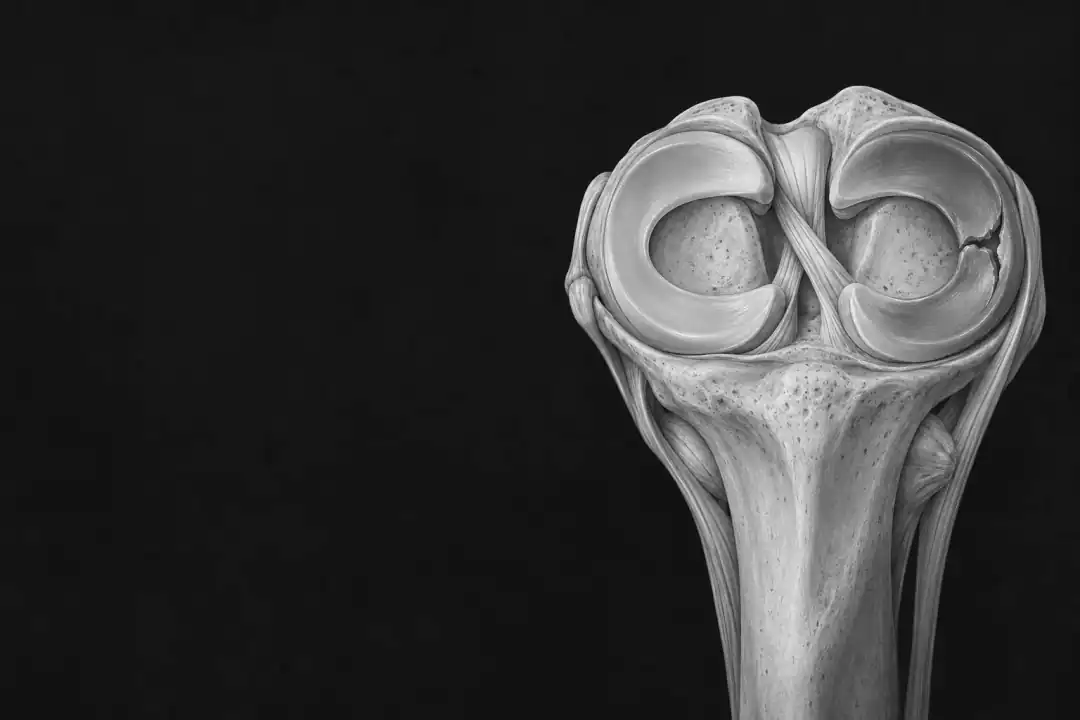
Quick summary A meniscus tear is a split in one of the two rubbery cartilage pads that cushion the knee. After fifty most tears are degenerative and often improve without surgery. Revive by MWS in Leesburg checks for true locking first, then considers orthobiologic, PRP or knee unloading options alongside strengthening.
An MRI that says degenerative meniscus tear can sound alarming. It is also extremely common. Many adults over fifty have a tear on MRI, and a good number of them have no knee pain at all.
Younger people usually tear a meniscus with a twist under load. After fifty the cartilage has often thinned and frayed. A tear can appear from something as ordinary as rising from a squat or stepping off a curb awkwardly.
At Revive by MWS in Leesburg the question we answer first is mechanical. Does the knee truly lock, or does it ache and swell? A knee that locks and cannot straighten may need a surgical opinion. A knee that aches along the joint line usually does well with strengthening, and other options can support that.
Understanding Meniscus Tear
The meniscus is a pair of crescent-shaped cartilage pads between the thigh bone and shin bone. A tear can be traumatic, from a twist, or degenerative, from gradual wear. Degenerative tears are far more common after fifty and usually respond to non-surgical care.
How it works
The pads spread and absorb load
Each meniscus spreads body weight across the knee and steadies it. The inner one takes more load and tears more often.
Aging cartilage frays
With age the meniscus becomes less elastic. Small tears and fraying appear, often alongside early arthritis in the same knee.
A flap can catch in the joint
Occasionally a torn piece flips into the joint and blocks movement. That true locking is different from the stiffness most people feel.
Who this care helps
- Pain along the inner or outer joint line of the knee
- An MRI showing a degenerative meniscus tear
- Swelling after activity that settles with rest
- People who want to try non-surgical care before arthroscopy
- Knees with a tear and early arthritis together
Who it does not help
- A knee locked bent that cannot be straightened
- A knee that gives way repeatedly after a recent twisting injury
- Rapid, large swelling within hours of an injury
- A hot, red, swollen knee with fever
Common Symptoms
- Pain along the inside or outside edge of the knee
- Swelling a few hours after activity
- A catching or clicking sensation
- Pain when squatting, kneeling or twisting
- Stiffness after sitting for a while
- Difficulty straightening the knee fully
- A sense that the knee may give way on turning
- Pain getting up from a low chair or out of a car
Common Causes
01 Gradual wear after fifty
The most common cause in our patients. The cartilage frays with age, and a tear appears without any memorable injury.
02 Twisting on a planted foot
Pivoting while the foot stays still loads the meniscus sideways. Pickleball, tennis and golf swings can all produce this movement.
03 Deep squatting and kneeling
Full squats and long periods kneeling in the garden compress the back of the meniscus. That is where many degenerative tears sit.
04 Early knee arthritis
Arthritis and meniscus wear travel together. Thinning cartilage places more load on the meniscus, and a worn meniscus places more load on the cartilage.
05 Weak thigh muscles
Weak quadriceps muscles absorb less shock, passing more load to the joint. Strength often drops after an injury, which adds to the problem.
How Revive Evaluates Meniscus Tear
- 01
Locking or aching
We ask whether the knee truly locks and cannot straighten, or catches and releases. True locking changes the recommendation.
- 02
Joint line tenderness
Pressing along the inner and outer edges of the joint finds the sore meniscus. Specific twisting tests add to the picture.
- 03
Swelling and stability
Fluid in the knee and ligament stability are checked. A loose knee after an injury points to a ligament problem as well.
- 04
Your MRI and X-ray together
We compare the tear on the MRI with arthritis on the X-ray. The balance between the two shapes the plan more than the tear alone.
Treatment Options We May Consider
Approaches we may consider, depending on what the evaluation finds.
A meniscus tear at Revive by MWS is treated after true locking is ruled out. Orthobiologic placement and PRP or PRF are considered for a painful degenerative tear, and knee joint decompression to unload the joint, each alongside quadriceps strengthening.
 01
Orthobiologic care for a worn meniscus
02 PRP or PRF placed in the knee
 03
Unloading the knee
Why a tear on MRI is not the whole story
Studies of adults over fifty regularly find meniscus tears in knees that do not hurt. A tear on a
scan is therefore a finding, not a verdict.
The examination decides whether the tear is the source of your pain, or whether arthritis or weak
muscles are doing more of the work.
What the evidence says about meniscus tears
The OrthoInfo guide to meniscus tears
explains the types of tear, the symptoms each produces and when surgery is considered.
It supports the order we follow: non-surgical care first for most tears, with surgery for locking or
for symptoms that do not settle.
What to Try First, and When to Seek Care
What to try first, and what should not wait.
Avoid deep squats, kneeling and pivoting while the knee is sore. Keep walking on flat ground, and use ice or a compression sleeve for swelling after activity.
Straight-leg raises and gentle thigh tightening keep the quadriceps working. Most degenerative tears settle better with strength than with rest.
Signs that should not wait
- A knee locked bent that you cannot straighten
- Large swelling within a few hours of an injury
- A knee that keeps giving way after a twist
- A hot, red, swollen knee with fever
Expert Care for Meniscus Tear in Leesburg
A degenerative tear that aches and a tear that locks the knee need very different care. The evaluation here separates true mechanical locking from the far more common aching tear.
The complimentary consultation includes a review of your MRI and X-ray side by side.
Further reading: the OrthoInfo guide to meniscus tears
Updated September 25, 2026