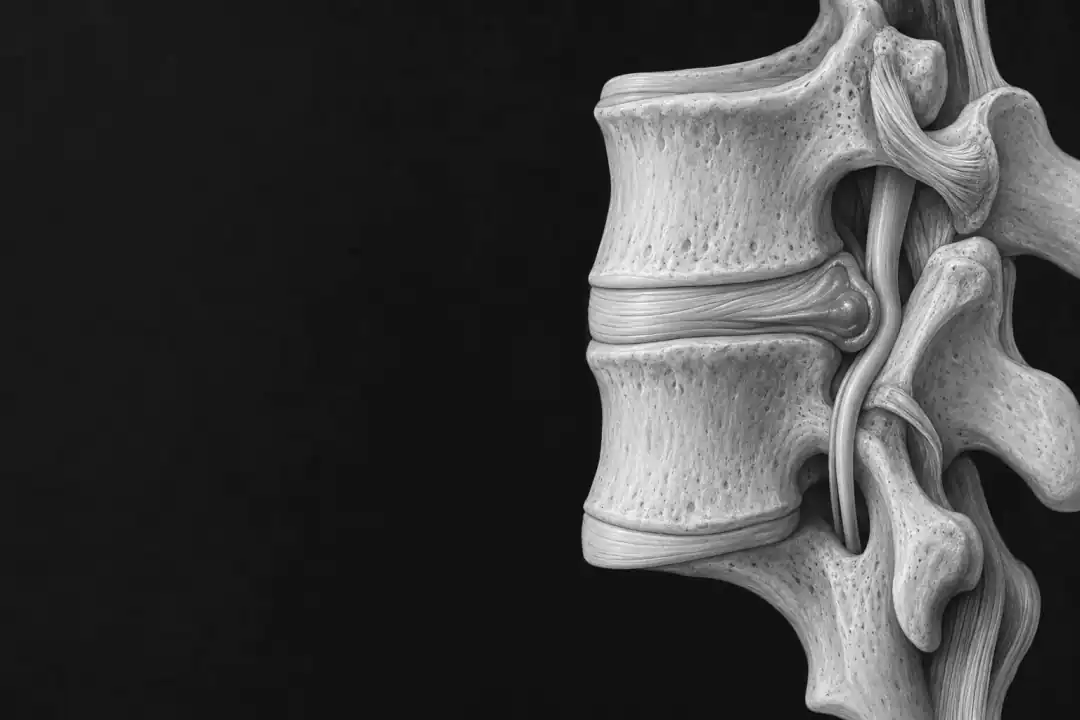
Quick summary A bulging disc spreads beyond its usual border, while a herniated disc has an inner portion pushing through the tough outer ring. Either can press on a nerve, and either can be painless. Revive by MWS in Leesburg matches the MRI to the examination, then considers spinal decompression or orthobiologic care.
The disc report usually arrives before the explanation. Words like protrusion, extrusion and annular fissure appear on a patient portal, and the internet fills in the rest. Most people assume the worst, and many assume surgery is next.
A disc is a tough outer ring around a softer center. Between the ages of forty and eighty, most spines show some disc bulging on MRI, including in people who have no pain. A herniation is more specific, and it can press on a nerve root in the neck or lower back.
At Revive by MWS in Leesburg we sit down with your scan and your examination together. The goal is to learn whether the disc on the report is the disc causing your symptoms. Only then can the right treatment be chosen, and quite often that treatment is not surgery.
Understanding Bulging and Herniated Disc
A bulging disc extends evenly beyond the edge of the vertebra. A herniated disc has a focal tear in its outer ring with inner material pushing out. Symptoms depend on whether that material irritates a nearby nerve root, not on the size alone.
How it works
Discs dry out and flatten with age
The soft center loses water over decades. The disc flattens and its outer ring bulges slightly, much like a tire with less air in it.
The outer ring can tear
Repeated bending and lifting can open small tears in the ring. Inner material may then push through at one point, which is what a herniation is.
A nearby nerve may react
Herniated material can press on a nerve root and release irritating chemicals. That produces arm or leg symptoms, while a disc that touches nothing may cause none.
Who this care helps
- An MRI showing a bulge or herniation that matches your symptoms
- Neck or back pain with arm or leg pain on one side
- Pain that is worse sitting, bending or coughing
- Symptoms of more than six weeks without progressive weakness
- People who have been told they are not yet surgical candidates
Who it does not help
- Loss of bladder or bowel control, which is a surgical emergency
- Weakness in an arm or leg that is getting worse week by week
- Numbness in the saddle area or around the genitals
- Disc findings with fever, cancer history or unexplained weight loss
Common Symptoms
- Low back or neck pain that flares with bending or lifting
- Pain traveling into an arm or leg on one side
- Tingling or numbness in the fingers or toes
- Pain that spikes when you cough, sneeze or strain
- Discomfort that builds the longer you sit
- Weakness in grip, or in lifting the foot or toes
- Muscle spasm across the lower back after a flare
- Relief when lying down or walking gently
Common Causes
01 Age-related disc dehydration
The most common background cause. Discs lose water and height over decades, and bulges on MRI become the norm rather than the exception after fifty.
02 Bending and lifting under load
Lifting while bent and twisted puts the most strain through the back of the disc. Many herniations follow a specific moment in the garden or garage.
03 Prolonged sitting
Sitting raises pressure inside the lower lumbar discs. Long drives and desk days are a common background to a disc flare.
04 Smoking and general health
Smoking reduces the blood supply that keeps discs healthy. Diabetes and lack of activity are also linked with earlier disc change.
05 Family history
Disc degeneration runs in families. Some people show disc change early despite careful habits, and that background shapes expectations.
How Revive Evaluates Bulging and Herniated Disc
- 01
Reading the MRI together
We explain each term on the report and show you which disc levels are involved. Then we check whether those levels fit where your symptoms are.
- 02
Which positions make it worse
Bending, sitting, extension and walking load discs differently. Disc pain usually worsens with bending and sitting and eases with walking.
- 03
Nerve root testing
Specific arm or leg positions stretch individual nerve roots. Reproducing the symptoms helps confirm which disc is responsible.
- 04
Strength and reflex screen
Muscle strength and reflexes in all four limbs are checked. Weakness that is worsening means referral for a surgical opinion rather than a treatment plan.
Treatment Options We May Consider
Approaches we may consider, depending on what the evaluation finds.
A bulging or herniated disc at Revive by MWS is treated according to what the examination confirms. Spinal decompression is considered for disc-driven pain without progressive weakness, and orthobiologic placement where nearby joint irritation adds to the problem.
 01
Decompression for a symptomatic disc
 02
Orthobiologic care when joints add to the pain
What the words on your MRI report mean
Bulge means the disc extends beyond its normal edge all the way around. Protrusion and
extrusion describe a herniation, with extrusion meaning the material has pushed further out.
Annular fissure is a small tear in the outer ring. Degenerative disc disease means age-related
change, and despite the name it is not a disease that spreads.
What the evidence says about disc herniations
The OrthoInfo guide to a herniated disk in the lower back
explains how a herniation forms, what symptoms it produces and why non-surgical care comes first for
most people.
Its main message is reassuring: most people with a herniated disk improve without an operation, and
surgery is kept for the smaller group who do not.
When the scan and the symptoms disagree
A large bulge with little pain, or a small herniation with a lot of pain, is common. The examination
decides which one matters, and treatment follows the examination.
The MedlinePlus encyclopedia entry on a herniated disk
describes the exams and imaging tests used to find one, and lists the symptoms that call for prompt
medical attention.
What a Typical Treatment Plan Looks Like
- 01
Settling the irritated level
Weeks 1 to 3
Sessions focus on reducing pressure and irritation. The first change is often that arm or leg symptoms travel less far, before the back or neck feels different.
- 02
Rebuilding tolerance
Weeks 4 to 6
Sitting, bending and lifting are reintroduced step by step. Exercises that load the spine in a controlled way are added at this stage.
- 03
Checking the numbers
Around week 8
Symptom reach, strength and sitting time are compared with the first visit. If they have not moved, the plan changes or a referral is made.
- 04
Protecting the disc afterward
Ongoing
Lifting technique, sitting breaks and regular exercise lower the chance of another flare. If one comes, it is handled as a setback, not a failure.
Results vary by individual.
What to Try First, and When to Seek Care
What to try first, and what should not wait.
In the first weeks of a disc flare, stay as active as the pain allows. Short walks are usually easier on a disc than sitting or bed rest.
Break up sitting every twenty to thirty minutes and avoid lifting while bent and twisted. Lying on your back with your knees supported often eases leg or arm symptoms for a while.
Signs that should not wait
- Loss of bladder or bowel control, or numbness in the saddle area, which needs emergency care
- A foot, hand or arm that is getting weaker rather than stronger
- Severe pain in both legs or both arms at the same time
- Disc pain together with fever or a history of cancer
Expert Care for Bulging and Herniated Disc in Leesburg
Disc care goes best when the scan is not treated in isolation. Here the MRI is read alongside a full nerve examination, so the plan is built around the disc that is actually causing symptoms.
The complimentary consultation includes a review of your MRI report and images, explained in plain language.
Further reading: the OrthoInfo guide to a herniated disk in the lower back
Updated September 25, 2026